Cardiac arrest does not wait for an ambulance. In the minutes before paramedics arrive, a calm pair of hands and a well timed set of compressions can be the difference between a life rebuilt and a life lost. That is why a practical, one day CPR course in Gosnells pays for itself many times over, whether you work in childcare or construction, coach a junior team on weekends, or simply want to be prepared for the unexpected at home.
I have taught and assessed first aid in Perth’s south east corridor long enough to remember trainees who later wrote back to say their practice made them useful on a real footpath, in a real kitchen, at a real pool. They never mention perfect theory scores. They remember the feel of a mannequin chest under their hands, how long two minutes of compressions really is, and the jolt of confidence that came with hearing an AED say, Analyzing heart rhythm.
This guide sets out what you can expect from a CPR course Gosnells residents can complete in a single day, how to choose between course options, and how to keep your skills current without losing a weekend. Along the way, I will touch on the local details that matter when you are planning training in or around Gosnells.
What a one day CPR course actually covers
A good provider in Gosnells teaches to Australian Resuscitation Council guidance. Under different banners you will usually see the nationally recognised unit HLTAID009 Provide cardiopulmonary resuscitation. It focuses on compressed, hands on learning that can be delivered in a morning or afternoon block, then assessed on the same day.
You will rehearse the DRSABCD approach in realistic sequences. This includes checking for danger, assessing response and breathing, calling 000 on a real or training phone, and using an AED with training pads. Expect to alternate adult practice with infant and child techniques. The difference between 30 compressions at a depth of one third the chest in a small child, versus 5 rescue breaths to begin newborn resuscitation, is better felt than read about. You should come away comfortable with both.
Instructors also tackle choking scenarios in a practical way. There is a rhythm to effective back blows and chest thrusts, and people often learn that rhythm faster with coaching than by reading a diagram. You will practice placing someone in the recovery position without straining your own back, and you will learn how to hand over to paramedics in a way that adds value rather than noise.
Every course I rate highly uses live timing. Two minutes of uninterrupted compressions looks short on paper and feels long in the shoulders. That sense of time, and the habit of swapping in a partner right on the mark, builds fluency you can recall under stress.
The Gosnells context
Gosnells is busy during school drop off, weekend sport, and market days. That means first aid training in Gosnells tends to draw a mixed room. You will find a childcare educator renewing a first aid certificate Gosnells employers require, a fitness instructor doing a cpr refresher course Gosnells gyms recognise, and a grandparent who watched a poolside scare unfold and decided to get formal training.
Venues commonly sit close to Albany Highway or the train line so they are easy to reach. Parking is usually free in the larger lots, and weekend sessions tend to be quieter on the roads. If you prefer public transport, a short walk from Gosnells or Thornlie stations can get you to many classrooms. Most providers schedule morning sessions that finish before lunch, and afternoon classes that free you for school pick up. That flexibility is not a luxury, it is how people with real commitments actually complete first aid and CPR Gosnells demands.
Choosing between CPR only and combined first aid courses
You will see three common options on a Gosnells first aid course schedule. CPR only, usually HLTAID009, runs as a focused session on resuscitation and AED use. Provide First Aid, HLTAID011, adds bleeding control, fractures, soft tissue injuries, burns, allergic reactions, and medical emergencies such as stroke and asthma. The childcare specific unit, HLTAID012, adds scenarios and legal considerations relevant to early childhood settings.
A pure cpr course Gosnells participants choose when they already hold a broader qualification and are up for their annual update. It is lean, often two to three hours including assessment if there is pre course reading. The full gosnells first aid course is a one day commitment for most learners, sometimes a half day in person with self paced theory completed online in advance. If your workplace has a risk profile that includes anaphylaxis or chemical exposure, or if you supervise children, the combined first aid and CPR course Gosnells employers prefer is the safer bet.
First aid training Gosnells providers sometimes bundle CPR and first aid in a way that still finishes inside a single day. Read the fine print on pre learning. Good programs let you complete theory in 2 to 4 hours at home, at your pace, then focus on the practical pieces in class. That structure helps people retain the procedural feel of CPR, which is the part your hands need to remember.
What makes training feel real rather than theoretical
There is a world of difference between watching a video and kneeling on the floor to deliver compressions until your wrists warm up. Quality gosnells first aid training includes:
- Manikins with feedback. A simple clicker under the chest that signals correct depth tightens technique fast. Some sets use lights for rate guidance, which can be valuable for learners who drift too slow under fatigue. AED trainers with voice prompts. When a device says Stand clear, analyzing, you learn to step back without stepping away from leadership. That prompt-response habit sticks. Pair work and rotation. You need to practice swapping rescuers so the compressions never stop. Watching someone else do it right next to you is also how many people catch small posture mistakes. Scenario flow. Good instructors build scenes that feel like a kitchen, a playground, or a workshop. You walk through finding a collapsed person, do your first checks, manage bystanders, call 000, and keep going until paramedics take over. Local nuance. Trainers who work across Perth will mention how Triple Zero calls route, how long ambulance response can be at busy times, and how to meet crews at night in a long driveway. Those small, practical details make you useful in your own street.
I remember a class where a quiet attendee insisted she had weak wrists and would never manage compressions. We adjusted her stance, stacked her shoulders over her hands, and had her lock her elbows. The clicker in the manikin started sounding like a metronome. By the end she was swapping in comfortably every two minutes and leading the AED sequence. Technique beats brute force more often than you think.
Legal and safety considerations you should know
People worry about doing harm. It is natural. The law in Western Australia protects well intentioned bystanders who render assistance in an emergency. The bigger risk is delay. You may crack a rib on an older patient, and you might bruise the sternum on a small framed adult. Those injuries are survivable. An uncompressed heart is not.
Hygiene is straightforward. If you have a pocket mask or face shield in a first aid kit, use it. If you do not, focus on compressions while you wait for an AED and paramedics. Many public places in Gosnells now keep AEDs, and the move toward compression only CPR for untrained bystanders is grounded in evidence that circulation beats perfect ventilation in the first crucial minutes for adult sudden cardiac arrest. Your course will still teach rescue breaths, especially for infants and children where oxygenation matters.
Manual handling matters for you as well. Learn to roll someone using your legs and hips so you can last more than a minute or two without strain. In training, we will stop and adjust your technique if your lower back starts to do the work. That protective habit will carry over under stress.
What to bring and how to prepare
A bit of planning turns a long morning into a smooth one.
- Comfortable clothes you are willing to kneel in, and closed shoes. You will be on the floor more than once. A water bottle and a light snack to keep your focus steady during practice blocks. Photo ID for enrolment and assessment, and a pen if your provider gives paper incident cards. Pre learning completed, if your course includes it. Expect 2 to 4 hours for a combined first aid and CPR course Gosnells providers offer, and 30 to 90 minutes for CPR only. A sense of realism. Ask yourself where the nearest AED is at your work, club, or shopping centre. If you do not know, plan to find out. That one question makes the training stick.
How the training day typically runs
Most cpr training Gosnells classes begin with a short welcome and safety brief. Trainers will outline the day’s flow and how assessment works. You are not memorising scripts. You are demonstrating that you can recognise an unresponsive patient, call 000 promptly, start compressions at an effective rate and depth, use an AED, and maintain the cycle until help arrives or the person recovers.
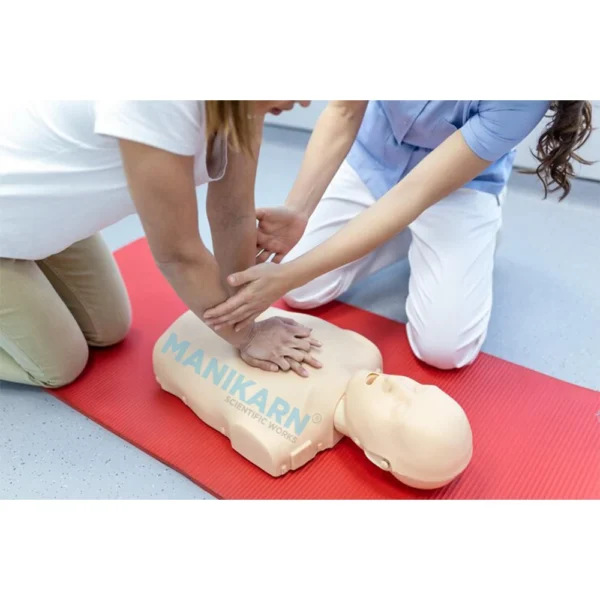
Hands on practice starts early. Expect to cycle through adult, child, and infant CPR stations. Instructors check your hand position and body mechanics while keeping the rhythm to the 100 to 120 compressions per minute range. We often use a song beat for pacing, not because it is cute, but because rhythm cues prevent fatigue drift. A few minutes with a metronome changes your sense of tempo for life.
AED drills come next, then airway management and rescue breaths, then choking relief. If you booked a gosnells first aid course that includes broader content, your afternoon will add bleeding control with direct pressure and dressings, elevation and immobilisation for sprains and fractures, and recognition of stroke, heart attack, asthma, and anaphylaxis. All these modules circle back to the same anchor: call early, act decisively, and communicate clearly.
Assessments are practical and fair. You will likely be placed in pairs or small teams and run through realistic scenes while trainers observe and nudge. The best assessments feel like a capstone practice, not a trap.
Certification, renewal, and employer expectations
On successful completion, most providers issue a digital statement of attainment, often the same day. If you need a wallet card or printed certificate, you can ask for one, though many workplaces now accept the PDF sent to your inbox.
Industry standards across Australia recommend updating CPR skills every 12 months. Techniques change, and the body forgets fine points like recoil when you do not practice. First aid certificates, such as HLTAID011, are commonly refreshed every 3 years, with the embedded CPR component refreshed annually. If I manage compliance for a workplace, I calendar a rolling cpr refresher course Gosnells staff can attend in small groups rather than sending everyone off at once. That reduces downtime and keeps a baseline of current skill on site year round.
If your employer uses a specific provider list, such as First Aid Pro Gosnells or another registered training organisation, check before you book. The goal is a recognised first aid certificate Gosnells businesses and schools accept without extra paperwork.
AEDs in the community and how they change your response
Automated external defibrillators are designed for laypeople. In shopping centres, sports clubs, and some workplaces across Gosnells you will see green cabinets or wall units marked with a heart and lightning bolt. When you find a person in cardiac arrest, two jobs matter most. Start compressions, and get the AED to the scene. The device will walk you through pad placement and analysis. If a shock is advised, it will charge and prompt you to stand clear. If no shock is advised, it will tell you to resume compressions.
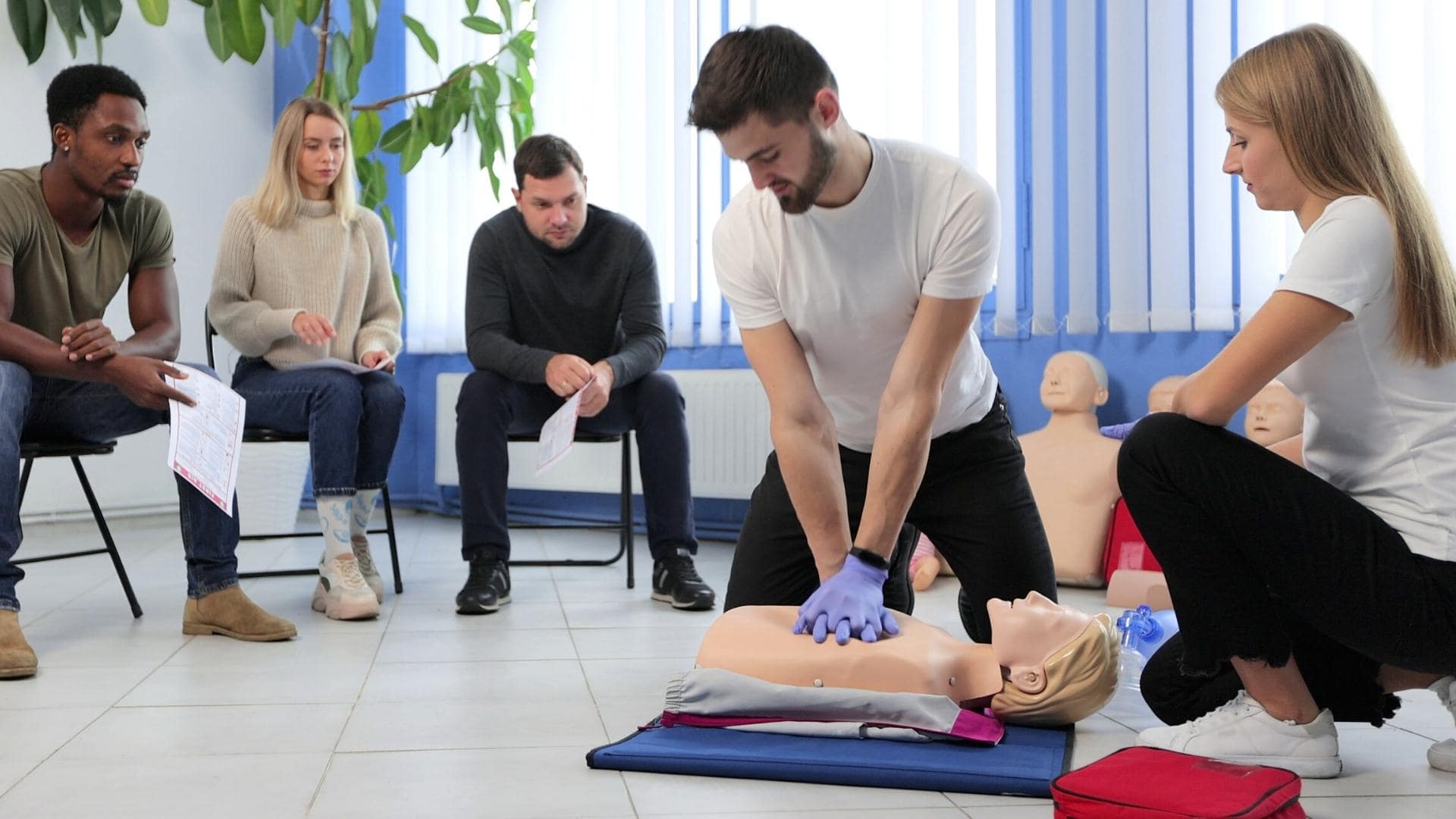
In training we practice the choreography. One person compresses. Another brings the AED and peels pads while the first rescuer continues compressions. Only when the AED says stand clear do you lift your hands. After the shock or no shock decision, compressions resume immediately. That flow, drilled a few times, becomes instinct.
Not every rhythm is shockable. People think defibrillators magically restart any stopped heart. In reality, AEDs shock certain arrhythmias. Even when no shock is delivered, the voice prompts keep rescuers on task, and the pads turn into a hands free method for paramedics to monitor and firstaidpro.com.au deliver advanced care. That is reason enough to get the device on early.
Adapting technique for infants and children
Parents and educators in Gosnells often ask whether they should train separately for paediatric CPR. In a good course, you will receive clear, repeated practice on child and infant techniques. The key differences are compressions depth and method, the ratio of compressions to breaths, and the priority of ventilations.
For an infant under one year, you will use two fingers or two thumbs encircling the chest, compressing to about one third of the chest depth. Rescue breaths matter more at this age due to the common causes of arrest being respiratory. You will also learn a different sequence for choking, using back blows and chest thrusts rather than abdominal thrusts. This is not academic detail. It is how you avoid harm and give a small body the best chance to respond.
I still remember a young father in a gosnells first aid training session who froze the first time he laid fingers on the baby manikin. By the third round, he moved smoothly, counted aloud, and delivered small, visible chest rise with each breath. He later told me that flow mattered more than the content he had read the night before. That is why hands on matters.
Costs, value, and how to read a course page
You will find cpr courses Gosnells providers offer at prices that vary within a narrow band. Expect to pay a modest fee for CPR only, and a higher but still accessible amount for full first aid and CPR courses Gosnells wide. Beware of rock bottom pricing that hides a long, mandatory pre learning with tricky quizzes. Good training is not about beating an online module. It is about what your hands can do when it counts.
Check that the provider is a registered training organisation or partners with one. Read student reviews that mention instructor quality and equipment. Look for clear information on venue access, parking, and the length of the face to face component. If timing is tight for you, search for first aid training in Gosnells that offers weeknight classes or condensed Saturday options. Many do.

As for value, I measure it in minutes saved. If your training helps you cut the time to first compression from two minutes to thirty seconds, you have doubled or tripled someone’s odds in certain arrest scenarios. That is not a slogan. It is simple physiology.
After the course, keep your edge
Skills fade. The fix is simple, and it takes less than the time you spend making coffee.
Set a reminder every two months to run a mental drill. Picture your kitchen, clubroom, or office. Where is the AED, if there is one? Who would you ask to call 000? Where would you clear space for compressions? Walk the route once. Touch the AED cabinet so your brain files the location. If you manage a team, nominate two people per shift who know where the AED is and can fetch it without thinking. These small habits convert training into readiness.
If you booked a first aid course in Gosnells with friends or colleagues, consider a quick refresher meet up three months later. Five minutes of practicing compressions on a pillow to a set tempo, a quick reminder of the DRSABCD sequence, and a chat about any new hazards at your site is often enough to keep the knowledge near the surface. You are not replacing formal refreshers, just giving your future self a head start.
When a refresher becomes essential
Any time techniques change, or if you experience a real incident, book a cpr refresher course Gosnells providers can deliver quickly. After a real resuscitation, the brain rewires what it thinks it knows. A structured debrief with an instructor gives you a chance to straighten out any shortcuts your mind took under stress. It also helps you process the event, which is not a small thing.
If your workplace updates policies, especially around incident reporting or AED location, align your team’s training within a month. The half remembered layout from last year will not help if the device moved to a new wall.
Tying it back to everyday Gosnells life
The point of gosnells first aid courses is not to collect certificates. It is to change outcomes for people you will actually meet. The shopper who stumbles at the Sunday markets. The teammate who collapses at the netball courts. The neighbour you find on the driveway. When you complete first aid and CPR course Gosnells training, you add a layer of resilience to the community that shows up at random hours, in ordinary places.
I have watched shy people become steady leaders during a mock emergency in class. I have watched seasoned workers learn one small tweak to their hand position that suddenly makes their compressions effective. The variety in a room mirrors the variety of moments outside it. That is the strength of first aid courses in Gosnells. The training is practical, local, and paced so that people with full lives can finish it in a day and still get to school pick up.
If you have hesitated because you imagine medical jargon and sterile rooms, try one session. You will find ordinary chairs pushed aside, people kneeling on mats, trainers who have stories from real incidents, and a set of skills that are clean, bounded, and manageable. You do not need to be fearless. You need to be willing, and trained. The course gives you both.
Finding the right session for you
Search for gosnells first aid, cpr training gosnells, or first aid training in Gosnells, and compare the next few dates. If you need combined content, look for first aid and CPR courses Gosnells options that fit a single day. If you are on a tight schedule, a morning CPR only session might be the most realistic first step. Confirm the venue is accessible to you, skim the pre learning time, and book a spot before the end of the month. It is easier to keep a plan than to make a new one.
Whether you choose a provider like First Aid Pro Gosnells or another local RTO, the goal is the same. Leave the room knowing you can recognise trouble, call for help, start effective CPR, and use an AED without hesitation. With that in your hands, you carry something valuable into workplaces, clubs, schools, and homes around Gosnells. And one ordinary day, you may be the reason someone else gets another chance at an ordinary day too.